Explore the tools built for a new civilization in the 2026 EVE Frontier Hackathon.
Voting has ended, but the project gallery remains open.
Explore the tools built for a new civilization in the 2026 EVE Frontier Hackathon.
Voting has ended, but the project gallery remains open.
🚀 Powerlay Frontier
Community desktop companion for EVE Frontier
production and mining planning
tribe coordination via contracts
transparent in-game overlays for mining, production timers, etc
available for Windows and macOS
Latest features and changes are in Releases
Some features (Contracts, Scout) interact with the SUI Network and require a connected EVE Wallet.
Why Powerlay?
EVE Frontier rewards coordination, but the game gives you almost no tools for it. Powerlay Frontier fills the gap: plan complex builds, track ore across mining runs, and keep your tribe in sync - all without leaving the game.
Features
🛠️ Builder - production & mining hub (stable)
Plan chains of production and break down ingredients for multiple builds at once. Builder is the core of Powerlay:
- Recipe breakdown - select what you want to build, see every ore and intermediate material you need, across the entire dependency tree.
- Real-time mining tracker - always know how much of each ore you've already mined and how much is left for your target builds.
- Run estimates - get quick estimates for required mining trips, refine your strategy on the fly, and avoid wasting time on wrong materials.
🖥️ Overlay - always-on-screen panels (stable)
Lightweight transparent panels that stay on top of EVE Frontier. See your production queue, ore counts, and tribe contracts without tabbing out. Designed to be unobtrusive - shows only what you need, when you need it.
📜 Contracts - tribe & public tasks (work in progress)
Create contracts tied to your EVE Wallet identity. Track progress, see who contributed what, and distribute rewards - replacing the spreadsheet chaos most tribes rely on today. Supports both tribe-only and public contracts. For solo pilots, public contracts are a way to take on tribe orders and earn ships or materials that would otherwise take much longer to unlock on your own.
🔭 Scout - system scanner (early prototype)
Scan and tag systems for tribe-oriented missions, mining hotspots, or upcoming targets. Currently in prototype stage - testing how players prefer to input and share system data, no backend yet.
## Designed for tribes, open to everyone
Powerlay is built around tribe workflows: shared storage, group contracts, and contribution tracking let your tribe coordinate resource drops, rewards, and shared goals without external tools.
Solo pilots still get full access to the core toolset - builder module, overlays, public contracts...
Safe, honest, community-focused
- No automation - Powerlay never plays the game for you.
- No memory reading, no process injection - it's a standalone window, completely separate from the EVE Frontier client.
- Wallet integration - connects to your EVE Wallet and public game data. That's it.
- Built by players - features are added based on real feedback from tribes and solo pilots.
---
Actively developed. Join us on Discord to share feedback and shape the roadmap.
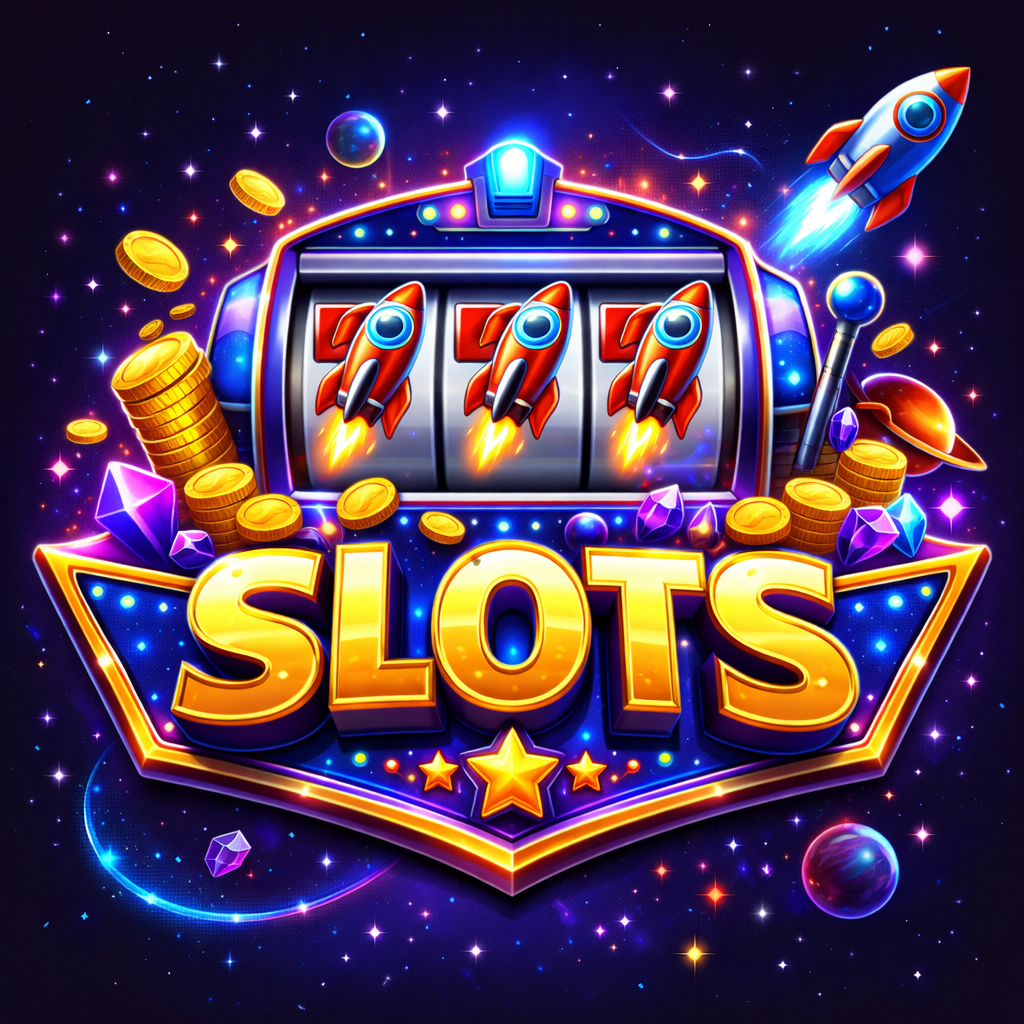
Slots for fun! Hello Eve team, everyone knows casinos are the backbone of the Eve economy. This project is fun and easy to understand. You can test it for yourself here.
https://projectgambaz.vercel.app
try my blackjack
https://nova-aces-app.vercel.app/
Test it for yourself, run it in any smart facility :D
PactaForge — Programmable Agreements with Verifiable Execution
PactaForge is an execution layer for programmable agreements built on Sui, demonstrated through real in-game economies like EVE Frontier.
Today, smart contracts primarily execute transactions, but real-world agreements depend on more than transfers — they require conditions, proofs, delivery verification, and dispute resolution. This critical context is often fragmented or trusted off-chain.
PactaForge solves this by combining on-chain agreement execution with verifiable data.
Each agreement is created as a programmable on-chain object where assets are locked trustlessly, and execution is triggered only when predefined, provable conditions are met.
We demonstrate this through three live contract flows:
• Bounty Contracts — rewards are locked and only released when a valid on-chain killmail proves completion
• Delivery Jobs — payments are automatically released when required items are delivered and verified on-chain
• Trade Escrow — atomic swaps where both parties lock assets and settlement is enforced without counterparty risk
All flows execute on Sui testnet using real wallets, real assets, and verifiable on-chain events.
By integrating verifiable data primitives (via Walrus), PactaForge ensures that not just transactions, but the full context of agreements — proofs, conditions, and outcomes — are persistent, auditable, and trustless.
PactaForge shifts smart contracts from simple transactions to complete, deterministic agreement systems.

EVE Frontier Index is a modular, data‑driven reputation and analytics system built for the EVE Frontier universe. It is part of the broader EVE Frontier Club ecosystem — a community‑driven platform designed to empower players, corporations, and alliances with transparent, meaningful insights.
The first module of the system, Trust Index, introduces a credit‑rating‑style score for players. It evaluates economic behavior, activity patterns, reliability, and social interactions using publicly available data, third‑party integrations, and community‑verified sources. The goal is to create a fair, explainable, and tamper‑resistant trust metric that helps players make informed decisions when trading, cooperating, or forming alliances.
The platform is built using Dart, with Serverpod powering the backend and Jaspr delivering a fast, reactive web interface. The architecture is fully modular: new rating systems — such as corporation reliability, alliance stability, regional economic health, or market‑risk indicators — can be added as independent server modules without disrupting the core system.
Key features:
• A transparent and explainable trust‑scoring model inspired by real‑world credit systems
• Multi‑source data ingestion with validation, normalization, and confidence scoring
• Player profiles with score history, metric breakdowns, and behavioral analytics
• Leaderboards and comparative dashboards for individuals, corporations, and regions
• A scalable, modular architecture designed for future expansion beyond the hackathon scope
Vision:
EVE Frontier Index aims to become the foundational reputation layer of the EVE Frontier ecosystem — a trusted, community‑aligned service that enhances cooperation, reduces fraud, and unlocks new forms of gameplay based on verified player reliability.
EVE Frontier has no collaborative intel infrastructure. The Rift Broker is positioned as the cryptographic black market for trading scout data. Scouts can encrypt and sell structure, fleet, resource, and activity intel. Buyers pay to unlock it, and a layered system of zero-knowledge proofs/on-chain event attestations make the intel verifiable before they spend a token. On top of this, a future reputation feature is aimed at enabling buyers to verify the scout's history/reliability (or lack thereof) in general.
The Core Loop:
A scout discovers something valuable — enemy fleet movements, resources, structure locations, etc.
They encrypt a structured intel payload via SUI Seal, store it on Walrus, and list it on-chain with metadata (region, type, price, freshness).
Listings can carry one or more cryptographic badges: a Groth16 presence proof tied to on-chain 'Jump/LocationRevealedEvent' data, a Combat badge from a killmail, an Activity badge from an 'ItemDepositedEvent,' or a Structure badge borne from a 'LocationRevealedEvent.'
Buyers browse listings — or can navigate via the 3D map of all ~24K EVE Frontier solar systems — and then pay to unlock Seal decryption for whatever intel they want to buy.
Scouts earn Sui tokens; trust accrues through a badge hierarchy (Combat > Presence > Activity > Structure > ZK-Verified).
Zero-Knowledge: the 'Groth16' circuit can prove "I was physically near these coordinates, verified by on-chain CCP event data," binding the proof to blockchain-recorded game events rather than self-reported inputs. Timestamp freshness caps staleness at 24 hours. Badges are stackable and composable — a single listing can carry multiple independent attestations.
The endgame: a fully decentralized intelligence economy where information asymmetry is a monetizable, cryptographically-verified asset class. Where the Rift Broker's map becomes a living intel heat-map of the whole EVE Frontier universe.

Frontier Hub is a web tool for EVE Frontier built to make the game easier to work with outside the client. It gives players and corps a clean way to explore the Stillness map, view systems and overlays, manage assemblies, and work with real game data without digging through raw APIs or clunky tools. The goal was to build something that looks good, feels fast, and is actually useful, not just another flashy frontend with fake panels. It is built with React, TypeScript, and Vite, connects into Frontier and Sui data through wallet and backend-supported flows, and is designed around real utility like map exploration, structure control, item and storage workflows, and live status updates. The whole point is to give players one place to handle the stuff that should be simple, but usually is not.

Frontier Periscope is an organizational toolkit for EVE Frontier built on the Sui testnet. It started as a monitoring tool but grew into something much bigger.
The core idea is to give non-technical players access to blockchain data and to offer enhanced features to smart assemblies like custom markets, standings-gated access, and shared treasuries.
You can create your own custom currencies and trade them through on-chain markets at any Smart Storage Unit. The market system uses atomic escrow transfers so items and payments move together in a single transaction, no trust required.
There's a standings and diplomacy system that lets you manage relationships with other players and tribes through on-chain registries. These standings feed into everything else, like controlling who can access your gates, trade at your SSUs, or even how your turrets pick targets. You can set up gate tolls in any custom currency and route the fees to a shared treasury wallet that multiple admins can manage.
Private encrypted maps let you share intel with your organization without exposing it to everyone on chain. The encryption is end-to-end so only invited members can see location data.
On the monitoring side, Sonar tracks real-time events from both the blockchain and local game logs. You get live notifications for combat, trades, fuel levels, gate activity, and structure changes. The 3D Star Map shows the full solar system with jump route planning.
Everything runs as a React app with an Eve Vault wallet connection. The smart contracts are all published on testnet and the dapp works directly with in-game smart assemblies through the EVE Frontier dapp framework.
In EVE Frontier, civilization does not just appear on its own. It is built by tribes that coordinate across star systems, pool resources, and defend what they control. Right now, most of that coordination still happens in spreadsheets, pinned Discord messages, and bits of tribal knowledge that vanish when the wrong person logs off. Tribe Command Center is meant to fix that. It is a real-time strategic coordination platform built specifically for EVE Frontier tribes. Instead of relying on a messy stack of external tools, tribes get a single command hub where their core operations live in one place.
Interactive Intel Map
Browse star systems, mark sovereignty zones, file rift sighting reports, and track gate network coverage. Search, filter, and drill into individual systems with resource overlays and historical intel.
Goals and On-Chain Pledges
Create strategic objectives, break them down into tasks, and let members pledge resources directly through Sui Move smart contracts. The full lifecycle, from pledge to delivery to approval, is tracked transparently, so leaders can verify who contributed what.
Fleet Operations
Create fleet ops with objectives, timelines, and location tags. Members can RSVP with their ship class, and the roster updates in real time.
Reputation and Leaderboard
Every approved contribution feeds into a live reputation score. Members earn rank through action, not talk. The leaderboard surfaces the tribe's top contributors across all activity types.
Soulbound Membership NFTs
Membership is handled on-chain through Sui Move. Each member holds a non-transferable NFT that can be used to gate access to tribe-controlled Smart Gates inside the EVE Frontier world.
Alliance Diplomacy
Track inter-tribe relationships, whether allied, neutral, or hostile, and manage diplomatic status at a glance.
The app connects directly to EVE Frontier through @evefrontier/dapp-kit, with support for EVE Vault wallet login and Smart Assembly embedding, so it can run inside the game client itself. On-chain, Sui Move contracts handle membership minting, pledge records, and Smart Gate access control. It is built with React 19, Vite 8, TypeScript, Zustand, and Tailwind CSS, deployed on Cloudflare Pages, and designed to be embedded in a Smart Storage Unit on Stillness.